Source Rubber Expansion Joint for Industrial Piping Systems
Compare 27 verified listings for rubber expansion joints suitable for air, water, oil, and acid applications. Buyers can evaluate specifications like working pressure, temperature range, and material composition from multiple Chinese manufacturers; compare the available evidence and request quotations based on your requirements.
Key considerations
Products List




Comprehensive Sourcing Guide
Ludox Leather Joint Sourcing Guide
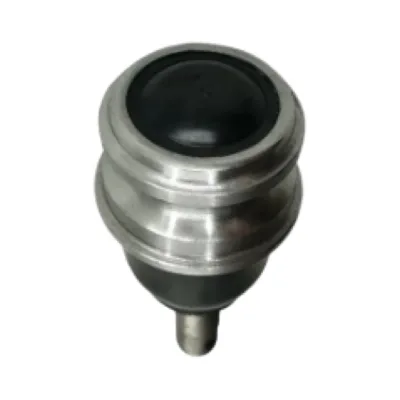
The term "ludox leather joint" most often points buyers toward flexible rubber expansion joints and related pipe connection components sourced from Chinese manufacturing hubs. Listings observed under this keyword family include rubber flexible joints in solid lug configurations, universal joint spider components, and automotive ball joint parts, so the first buyer task is to disambiguate the exact product type before comparing quotations. Because the observed catalog spans pipe expansion joints rated DN20–DN200 in one listing family and up to DN40–DN1000 in another, a request for quotation that does not fix the nominal diameter, flange standard, and joint type will return incomparable offers.
This guide helps procurement teams structure that comparison. Treat every listing attribute as an observation from a single product page rather than a market-wide guarantee: a listed working pressure of PN10/PN16, an EPDM/NBR/Neoprene construction, or a nylon polyester casing ply applies to the specific item described, not to every result under the keyword. Verify each parameter against the quotation documents, request material certifications for the actual batch, and confirm packing, origin, and compliance paperwork in writing before committing to a trial order or a framework contract.
Product Scope and Observed Listing Signals
Observed listings under this keyword cluster describe rubber expansion joints with solid lug flexible joint models, outer and inner rubber in EPDM, NBR, or Neoprene, and a nylon polyester fabric casing ply. Suitable media are listed as air, water, oil, and acids, with a stated suitable temperature window of -20°C to 100°C and working pressures of PN10 or PN16. These attributes describe typical flexible pipe connectors used in pumping systems, HVAC, and general industrial pipework, which is consistent with trusted category knowledge. However, the same keyword also surfaces automotive ball joint listings for Subaru applications and universal joint spider components, so scope drift is a real risk.
Buyers should therefore screen results using hard filters: product name, DN range, flange drilling standard, and rubber compound. Note the conflicting signals across pages—one listing states DN20–DN200 while another claims DN40–DN1000, and packing descriptions range from carton cases to standard export wooden cartons to multi-layer plastic bag and wooden box combinations. Origins cited include Tianjin, Hangzhou, and Xiaoshan in China. Treat these as page-level observations, and require every shortlisted supplier to restate the applicable values for the exact article number quoted.
Technical Specifications to Verify
Pressure and temperature are the first verification targets. Observed pages list PN10/PN16 working pressure and a -20°C to 100°C temperature range, but the buyer must confirm whether these are maximum ratings or continuous operating values, and whether both apply simultaneously. For a joint rated for oil or acid media, confirm which rubber compound is offered for each medium—EPDM, NBR, and Neoprene behave very differently against hydrocarbons and acids—and ask for compound datasheets rather than accepting the generic "EPDM/NBR/Neoprene" wording. The casing ply of nylon polyester fabric should be specified in number of plies for the pressure class requested.
Dimensional verification comes second. Listings show DN ranges from DN20–DN200 to DN40–DN1000, so pin down nominal diameter, face-to-face length, flange outer diameter, bolt hole count and pitch, and the lug or flange standard against your piping drawing. A listed size of 23.825*61.3 on one page illustrates that some listings carry non-standard dimensions that need explicit confirmation. Finally, for the automotive and universal joint items appearing under this keyword, verify OE reference numbers such as 20206AJ000 and the listed model numbers against the vehicle or equipment specification before ordering samples.
Compliance and Safety Documentation
Certification claims appear on several observed pages, including CE, ISO9001, ISO14001, SGS, and OHSAS18001 on one listing, and SGS plus TUV on another, with one page citing ISO9001 only. Do not treat these as validated: ask each supplier for certificate copies with scope statements, issue dates, and issuing body details, and check that the certificate scope actually covers rubber expansion joints or the specific joint type you are buying rather than an unrelated product family. A certificate number without a verifiable scope is weak evidence for a pressure-bearing component.
Beyond certificates, request batch-level documentation appropriate to a pressurized pipe component: material composition confirmation for the rubber compound, a pressure test report for the supplied lot, and dimensional inspection records against the agreed drawing. If your market requires additional chemical compliance for rubber parts in contact with potable water or specific media, state that requirement explicitly in the RFQ, since none of the observed listing attributes address it. Low-confidence background keywords such as OEKO-TEX and REACH appear in the broader dataset but should not be assumed to apply; confirm any such requirement directly with the supplier and let the supplier demonstrate conformity.
Cost Drivers and Commercial Terms
Observed listings span a very wide price band from roughly USD 1.3 to USD 360, with minimum order quantities ranging from 1 piece to 2000 pieces. That spread reflects the mixed product scope under this keyword—small automotive ball joints at one end and large-diameter expansion joints at the other—so never benchmark a quotation against the keyword-wide price range. Instead, compare like-for-like quotes on the same DN size, pressure class, rubber compound, and flange configuration, then decompose each price into material, molding, flange or lug hardware, testing, and packing components.
Commercial terms worth negotiating include packaging choice and its cost impact. Observed packing descriptions range from a simple carton case to standard export wooden cartons and multi-layer plastic bag, colour box, and wooden box combinations; heavier wooden export packing protects large rubber joints but adds cost, so match packing to your freight mode. One automotive listing states a delivery time of 1–7 days and an MOQ of 10 pieces—useful as an indication of what small-component suppliers advertise, but not transferable to engineered expansion joints. Confirm Incoterms, payment terms, and any tooling or sample fees in the same document as the price.
Supplier Qualification and Quality Control
Qualification should begin with a capability check against the technical envelope: confirm the supplier can mold the requested rubber compound, produce the stated DN range with consistent wall thickness, and assemble the lug or flange hardware in the galvanized finish noted on one listing. Ask for factory audit reports or a live video walkthrough of the molding and vulcanization areas, and check whether the supplier manufactures in-house or trades. The cited origins—Tianjin, Hangzhou, and Xiaoshan—host many rubber component factories, but origin alone is not a qualification.
Quality control then rests on incoming and pre-shipment inspection. Define an inspection plan covering visual defects, dimensional checks against the drawing, hardness and compound verification, and a hydrostatic or pressure test on sampled joints from each lot, with the acceptance criteria written into the purchase order. For a first order, request a pre-production sample and a golden sample for reference. For the automotive ball joint listings marked "New" condition with OEM standard size claims, require fitment verification against the OE number before approving batch production. Reject any supplier unwilling to put test methods and acceptance limits in writing.
Long-Term Procurement Checks
Once a supplier passes qualification, protect consistency across repeat orders. Lock the approved specification into a controlled drawing and specification sheet covering rubber compound, ply construction, pressure class, dimensions, surface finish, and marking, and require written notification and re-approval before any material or process change. Rubber compounds are the most common silent substitution point; periodic compound verification through independent testing keeps the EPDM, NBR, or Neoprene claim honest over the contract life. Schedule annual re-review of certificates so lapsed ISO or SGS documents are caught before renewal negotiations.
Operational continuity matters equally. Track lead-time reliability against agreed delivery dates, monitor packaging condition on arrival, and log field failure rates by batch number so problems trace back to a production lot. Maintain at least one qualified alternate source for critical sizes, since single-sourcing engineered joints concentrates schedule risk. Revisit pricing annually against raw material movement rather than accepting flat renewals, and use accumulated inspection data in those negotiations. Finally, re-run the disambiguation discipline each time you source under this keyword—new listings may again mix pipe joints with automotive components.
Supplier Qualification and Quality Control
For a pressure-bearing rubber component, qualification evidence should outweigh marketing copy. Build a shortlist checklist: verifiable certificates with correct scope, factory photos or audit reports showing molding and vulcanization capability, a documented quality management process, and willingness to provide batch test records. Suppliers citing Tianjin, Hangzhou, or Xiaoshan origins are common in this category, but geography is not a quality signal—request references or transaction history where available. Compare how precisely each supplier answers specification questions; vague answers about compound selection or pressure ratings are an early warning.
Quality control then continues through production. Agree on an AQL-based inspection standard for pre-shipment checks, specify appearance criteria for the rubber body and galvanized hardware, and decide who performs testing—supplier with reports, third-party inspector, or your own team on arrival. For repeat orders, retain sealed retained samples from approved lots so drift in compound or dimensions can be detected by comparison. For automotive ball joint items requiring 1–7 day dispatch claims to be meaningful, confirm actual stock levels rather than made-to-order assumptions. Document every agreed control in the purchase contract, not in email threads alone.
FAQs
What materials are used for rubber expansion joints?
Rubber expansion joints typically utilize EPDM, NBR, or Neoprene for both outer and inner rubber layers. These materials ensure durability and resistance against various media including air, water, oil, and acid. The casing ply often incorporates Nylon Polyester Fabric to enhance structural integrity under pressure.
What is the working pressure rating for these joints?
The standard working pressure ratings for these rubber expansion joints are Pn10 and Pn16. These ratings indicate the maximum pressure the joint can safely withstand during operation. Buyers should select the appropriate rating based on their specific system requirements to ensure safety and performance.
What temperature range can these joints withstand?
These rubber expansion joints are suitable for temperatures ranging from -20 to 100 degrees Celsius. This wide range allows them to function effectively in various environmental conditions. It is important to verify that the selected rubber material matches the specific temperature demands of your application.
What certifications are available for these products?
Products may come with certifications such as CE, ISO9001, ISO14001, SGS, and OHSAS18001. These certifications indicate compliance with international quality and safety standards. Buyers should request specific certification documents to verify that the supplier meets the required regulatory standards for their region.
What are the standard size ranges for these joints?
Standard sizes typically range from DN20 to DN200, with some options extending up to DN1000. The specific model may also have dimensions like 23.825 by 61.3. Buyers should confirm the exact size requirements with the supplier to ensure compatibility with their existing piping systems.
How are these joints packaged for shipping?
Packaging options include carton cases, standard export wooden cartons, and combinations of plastic bags with color boxes and wooden boxes. Proper packaging protects the joints during transit. Buyers should specify their preferred packaging method to ensure the products arrive in good condition.